Review of the TYR Valkyrie Elite V2
Below we are providing an overview of the TYR Valkyrie Elite 2 race shoe, comparing it to other racers on the market, and giving a full review.

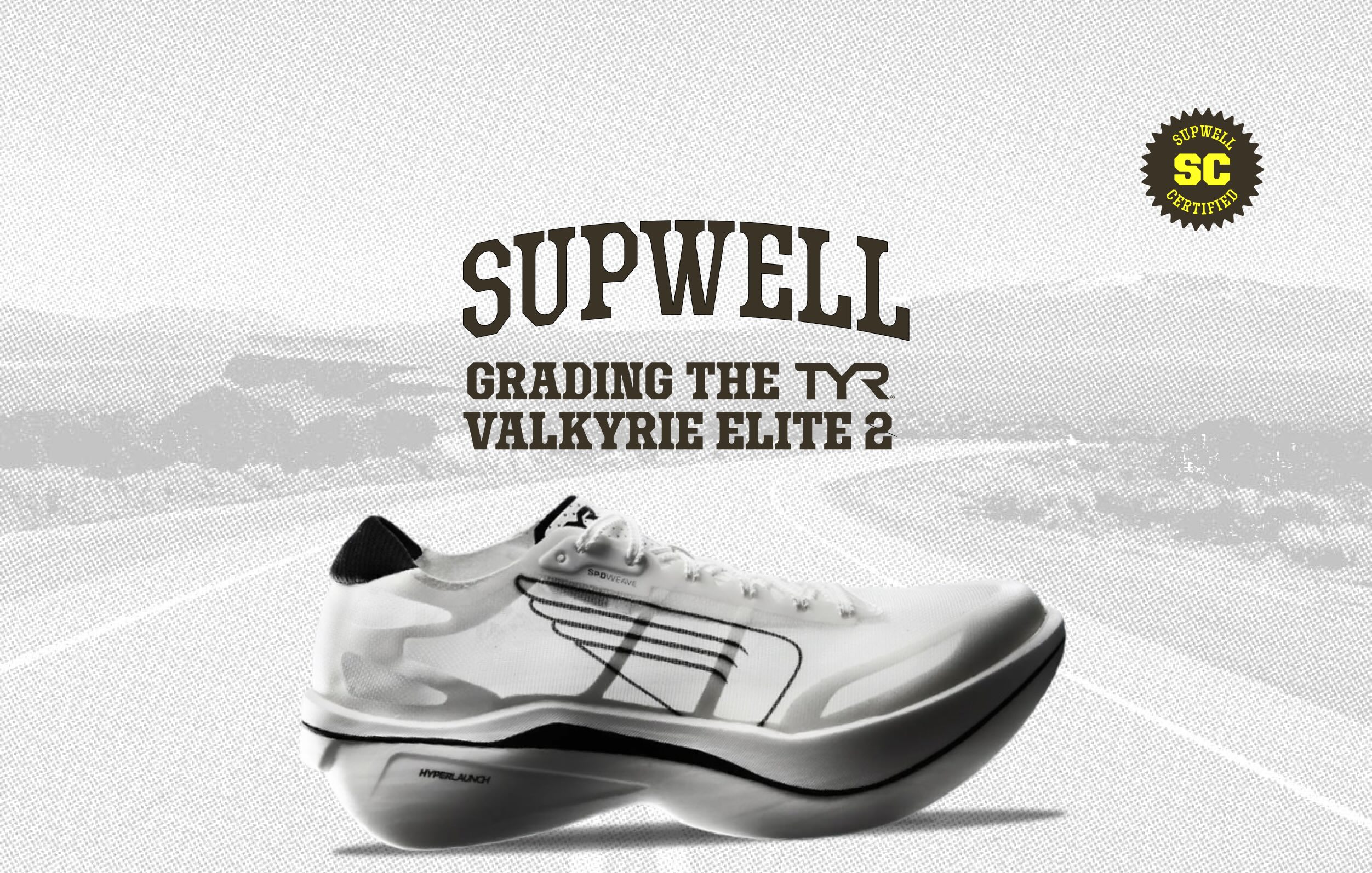
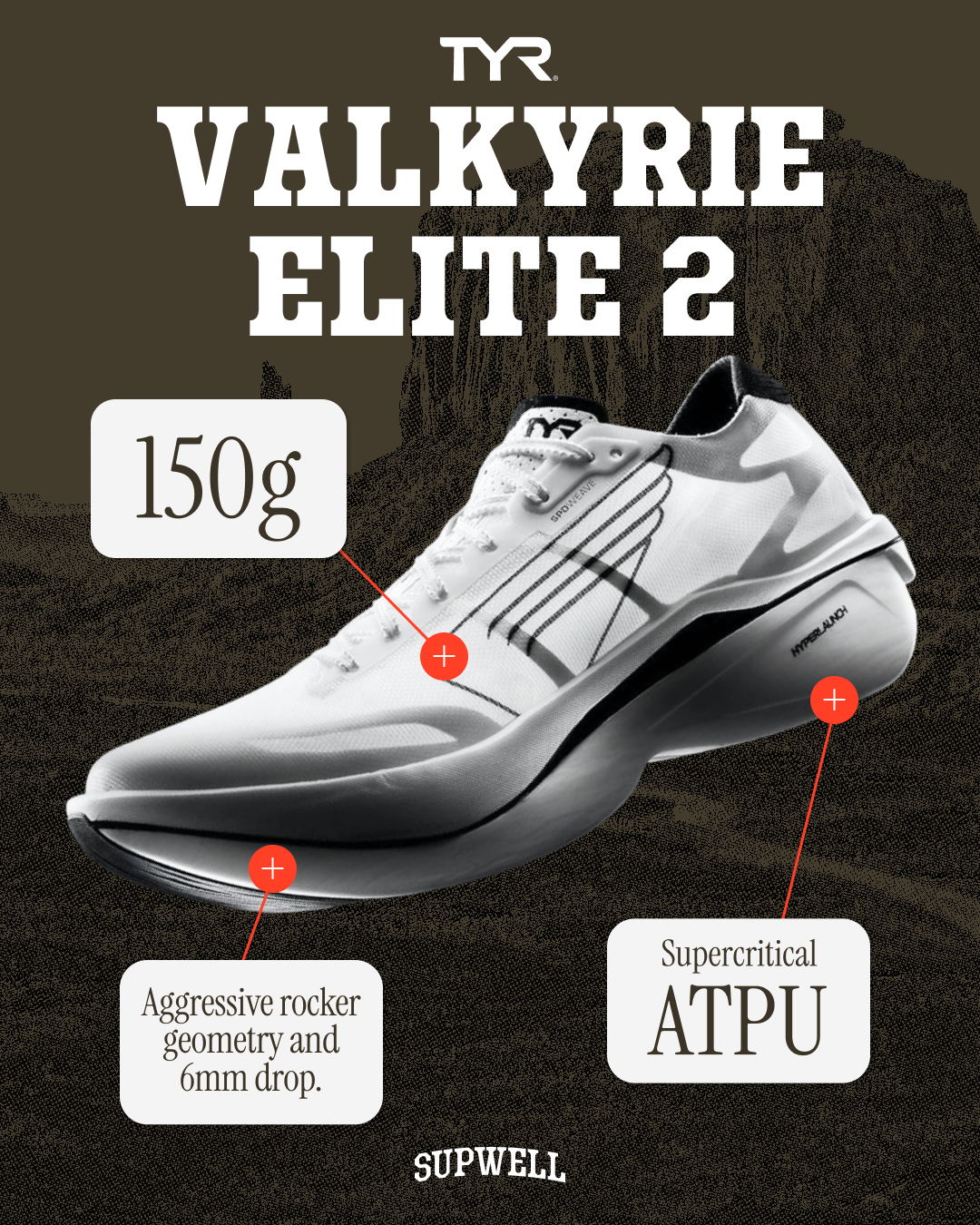
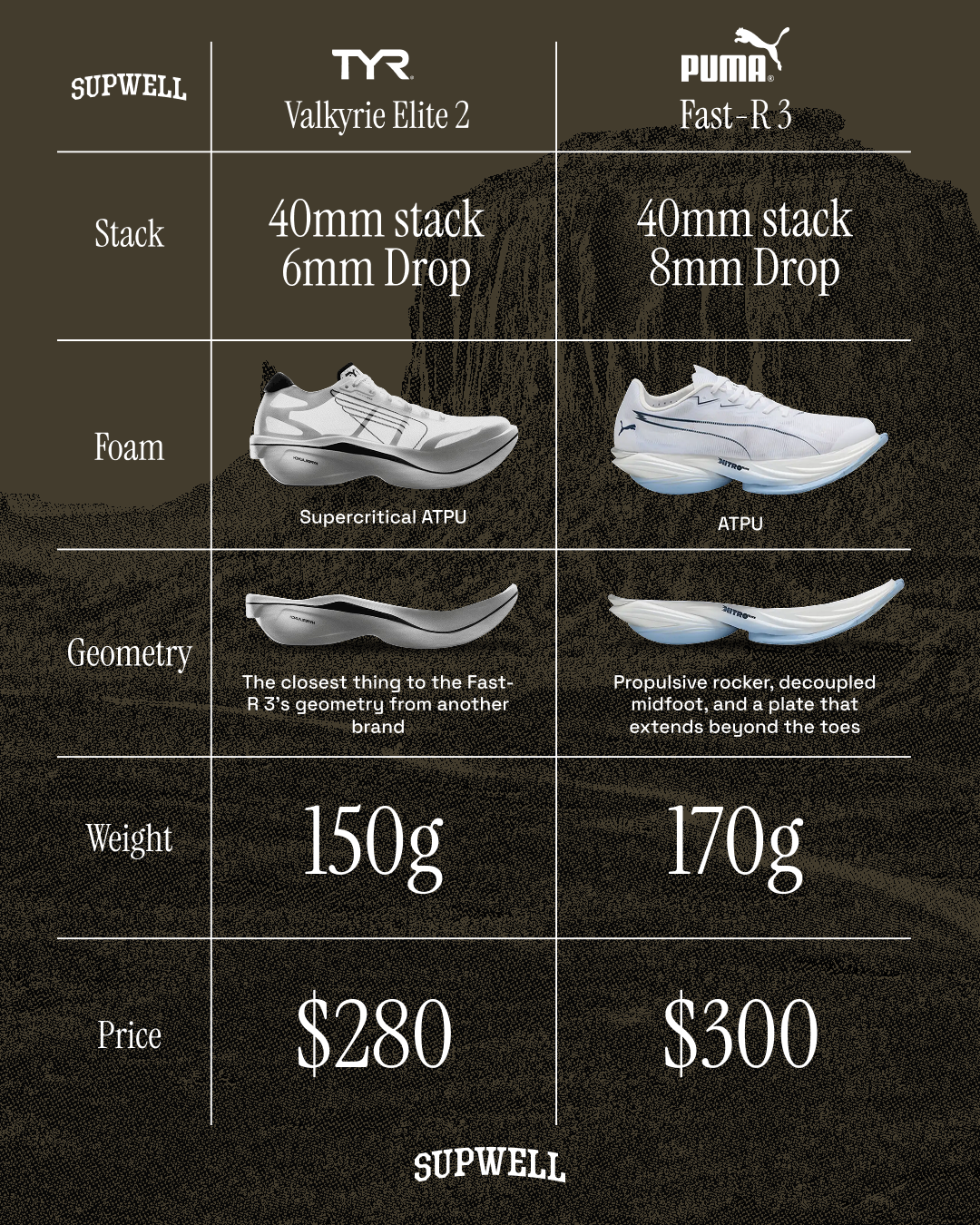
The TYR Valkyrie Elite 2 is here to make a statement. TYR is coming for the super shoe throne with a 150g racer built around Supercritical ATPU, a 40mm stack, 6mm drop, and an aggressive rocker. At $280, it’s lighter and cheaper than the Puma Fast-R 3 while offering a very similar geometry.
Specs of the TYR Valkyrie Elite V2
Stack Height: 40mm in the heel with a 6mm drop
Weight: 150 grams in a Men's US size 9
Midsole Construction: 100% ATPU midsole foam called HyperLaunch with a full length carbon fiber plate
Price: $280
TYR Valkyrie Elite V2
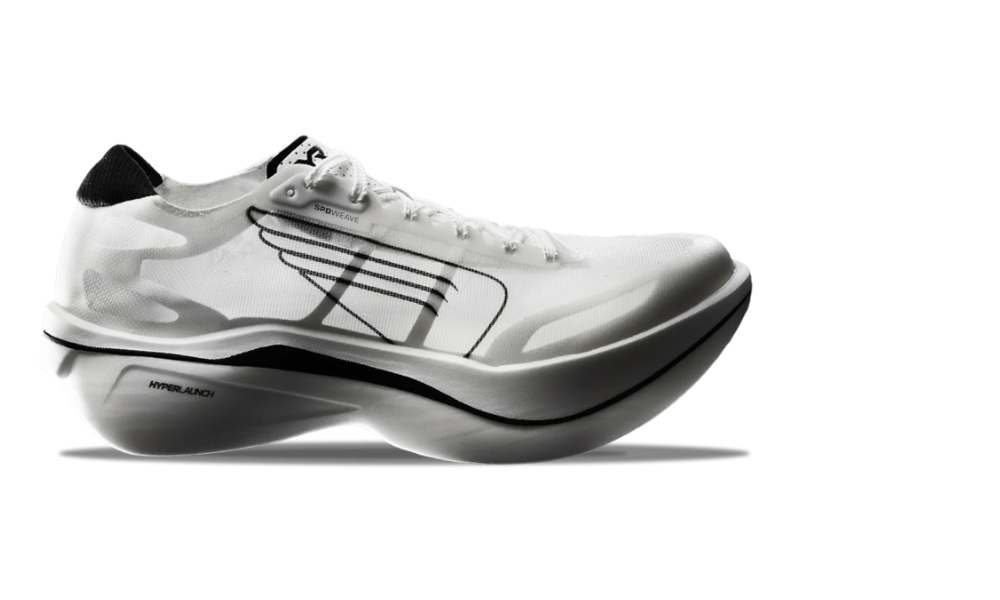
Grading the TYR Valkyrie Elite V2
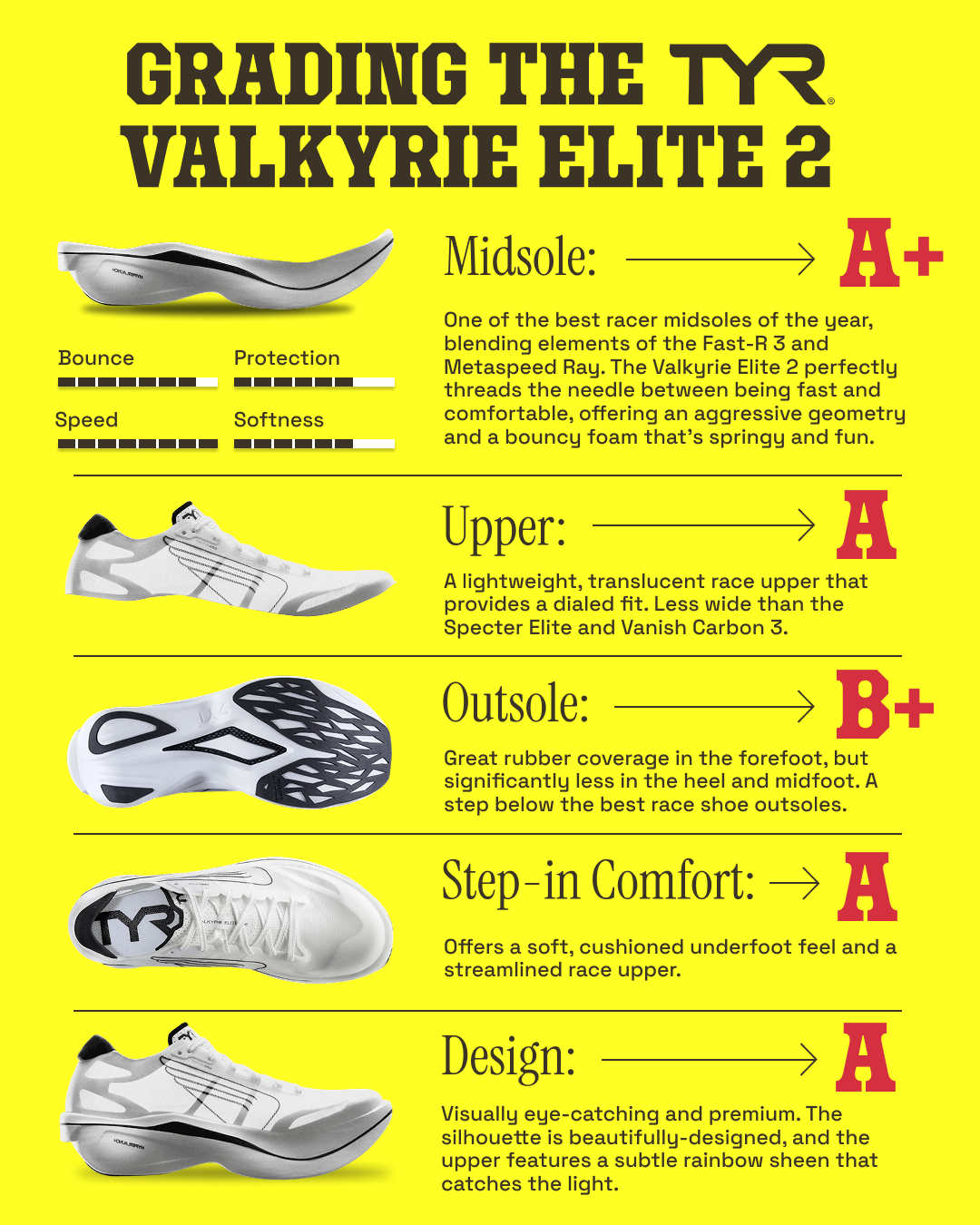
The Midsole—A+
The Valkyrie Elite V2 has one of the best racer midsoles of the year, blending elements of the Puma Fast-R 3 and ASICS Metaspeed Ray. The Valkyrie Elite 2 perfectly threads the needle between being fast and comfortable, offering an aggressive geometry and a bouncy foam that’s springy and fun.
The Upper—A
The Valkyrie Elite 2 has a lightweight, translucent race upper that provides a dialed fit. It is less wide than the Top Specter Elite and Altra Vanish Carbon 3.
The Outsole—B+
It has great rubber coverage in the forefoot, but significantly less in the heel and midfoot, which is a step below the best race shoe outsoles.
Step-In Comfort—A
It offers a soft, cushioned underfoot feel and a streamlined race upper upon step-in.
Design—A
Visually eye-catching and premium, the silhouette of the Valkyrie Elite 2 is beautifully-designed, and the upper features a subtle rainbow sheen that catches the light.
Barrett's Review of the TYR Valkyrie Elite V2
About Barrett
Barrett is Supwell's Brand Designer. He lives in Southwestern Ontario, Canada and he's recently built up to his first 74 mile week. He's currently training for a sub 3 hour marathon at the Indy Monumental Marathon in November of 2026.
Key Take-Aways
The Valkyrie Elite 2 is a highly-competitive, top tier racer that rivals (but doesn’t surpass) the Puma Fast-R 3. TYR has crafted a meticulously-designed shoe that cohesively pairs a propulsive rocker with bouncy, responsive ATPU foam in a 150 gram package. Don’t overlook this one when searching for a fall race shoe. For context, my first run in the Valkyrie Elite 2 was a progression: 20 minutes relaxed, 20 minutes steasy, 20 minutes at 30 seconds slower than marathon pace, 20 minutes at marathon pace (this ranged from 9:00 mins/mile all the way down to 6:45 pace).
Midsole
The Valkyrie Elite 2 utilizes a supercritical ATPU midsole, the overall feel of which is reminiscent of the Fast-R 3’s foam. That’s not to say that this is an overly firm compound; this formulation of ATPU is actually slightly softer than what you might be used to in shoes like the ASICS Megablast and Puma Deviate Elite 4, primarily in the heel. I will say that I still prefer the forefoot experience of the Fast-R 3 due to the massive forefoot landing pad that Puma implemented (nothing I’ve ever tried has matched the Fast-R 3’s sheer speed assistance). The Valkyrie Elite 2, however, did feel like a highly efficient shoe—it’s super bouncy, and is only 150 grams, offering one of the best weight-stack ratios in any super shoe. It really is light as a feather on foot; even on tired legs from high volume training, wearing the Valkyrie made running my 6:50 min/mile goal marathon pace feel very smooth this morning.
Upper & Fit
Contrary to what you might expect, this is a very snug, streamlined shoe that’s on the borderline of being too tight for my higher volume foot. The length is true to size and the vertical volume in the midfoot isn’t a problem, but the toebox is much narrower than I thought it was going to be. I have the feeling that TYR’s product team chose to forego their traditional anatomical fit in order to create the lightest, most competitive race shoe possible. I had no issues once I got out on the run, but I wouldn’t buy this shoe if you’re expecting a Topo or Altra-like fit.
For Yowana's full review of the TYR Valkyrie Elite 2, check out the Supwell YouTube channel:
Comparisons to Other Racers
Puma Fast-R 3 Comparison
There’s no way that TYR didn’t have Puma’s pinnacle racer as their North Star when designing this shoe. The Valkyrie Elite 2 rides like a Fast-R 3-lite, delivering what I’d estimate to be roughly 90% of the speed assistance. Both shoes have a similar lower to the ground ride, aggressive rockers that launch you forward, and the same almost negative drop feel. The Fast-R 3 is still my race shoe of choice, but TYR’s shoe isn’t trailing very far behind.
Puma Fast-R Nitro Elite 3

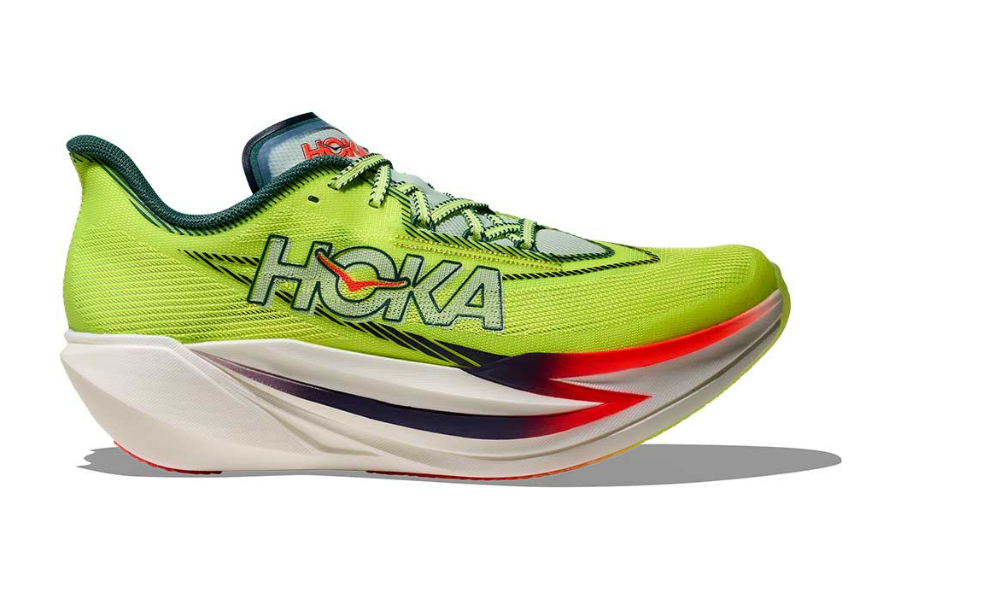
Hoka Cielo X1 3.0 Comparison
The Cielo X1 3.0 has the edge as a marathon racer due to its massive stack of mid foot foam. I would argue the foam itself in the Valkyrie is actually better than the PEBA that Hoka is currently using, but I can’t argue with the Cielo’s unique combination of protection, comfort and speed assistance for the marathon distance. For the half marathon and below, however, I would pick the Valkyrie.
Hoka Cielo X1 3.0
Puma Deviate Nitro 4 Comparison
The Valkyrie runs laps around Puma’s mainstream racer; it has a more dynamic formulation of ATPU, and its geometry is aggressive and fun compared to the Deviate’s flat, traditional platform. The only area where the Deviate comes out on top is the upper—it’s very breathable and high volume compared to the Valkyrie’s snug fit.
Puma Deviate Nitro Elite 4
%201.png)
On Cloudboom Strike Comparison
I really liked the Cloudboom on my first run, but since running a few more workouts in it, I just can’t get it going at faster paces. On’s shoe features a much softer, compressive PEBA that collapses and doesn’t rebound quickly enough. On the other hand, the Valkyrie has the exact pop and responsiveness I’m looking for on race day. TYR also wins in the geometry department.
On Cloudboom Strike

Saucony Endorphin Elite 3
The Endorphin Elite 3 is softer, more unstable, and more protective-feeling overall, whereas the Valkyrie is more stripped back and “serious” feeling. The Endorphin Elite 3 almost bounces you “up” and then forward due to how soft and springy the foam is, while the Valkyrie is more responsive, delivering that immediate sensation of being propelled into the next stride.
Saucony Endorphin Elite 3
.png)
For a weekly dose of MILEAGE, shoe reviews, and inspiration, sign up for Mileage Mantra, the Supwell weekly newsletter.
Find your next running shoe
Answer a few questions to find the best shoe based on your preferences and goals