Top 5 Running Shoe Red Flags
Below we are highlighting the top 5 red flags when it comes to running shoe marketing and design. We will help you determine if seemingly unnecessary cut-outs, terms like bouncy and designed for the masses, or the use of plastic plates in some shoes are just gimmicks and not performance enhancing features.


From unnecessary foam cutouts to brands marketing “jacquard mesh” like its groundbreaking technology, some trends feel more like buzzwords than meaningful upgrades. Of course there are exceptions, but these are a few things that usually make us raise an eyebrow before lacing up.
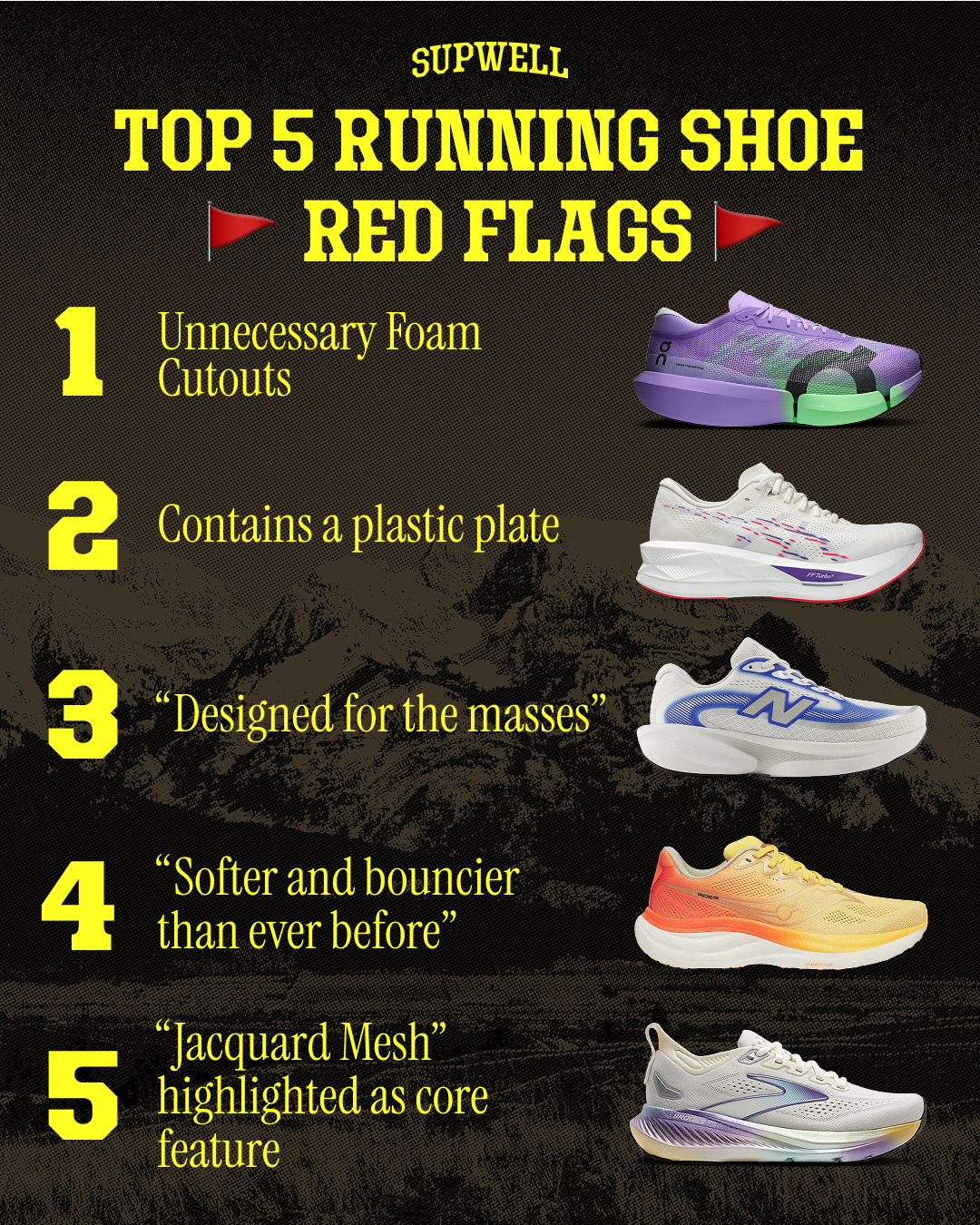
1. Unnecessary Foam Cut-Outs
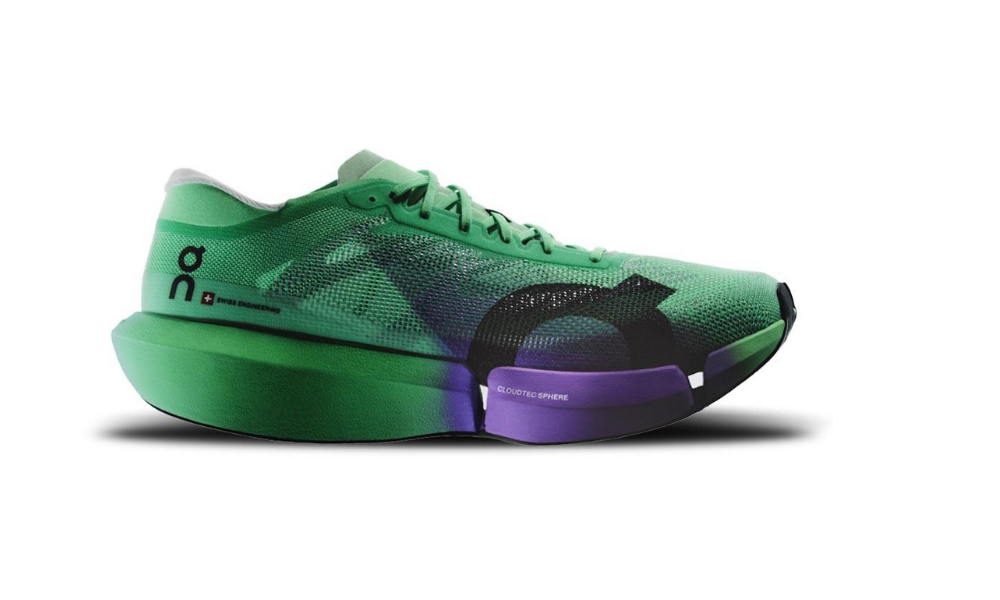
Lateral and/or medial midsole cutouts have turned out to be gimmicks in the race shoes we’ve tested. In our experience, if a race foam is good enough, you don’t need to tinker around with it very much. The Brooks Hyperion Elite 5 featured really odd round spheres cut-outs in the midsole, which did nothing to improve the ride or energy return. Another example is the On Cloudboom Strike 2, which implements something that On is calling CloudTec Sphere geometry, which are three different pucks of Helion HF foam. It results in a somewhat decoupled midsole design, but did nothing to enhance the performance compared to the original Cloudboom Strike, which we found to be an excellent soft and bouncy racer without any gimmicks.
On Cloudboom Strike 2
2. Contains a Plastic Plate
If a brand is still using a plastic plate in 2026 for speed assistance, it’s a sign that they’re stuck in 2024. More responsive, bouncy foams found in shoes like the ASICS Megablast and Dynafish Xiaonian have negated the need for plastic plates in uptempo shoes. Gone are the days when consumers are asking for plated daily trainers or speed trainers. Now we are looking for race foams to be implemented into our elevated daily trainers and workout shoes. Some examples of plastic-plated training shoes are the Saucony Endorphin Speed 5, Hoka Mach X3, ASICS Sonicblast, and the Brooks Hyperion Max 4.
ASICS Sonicblast

3. "Designed for the Masses"
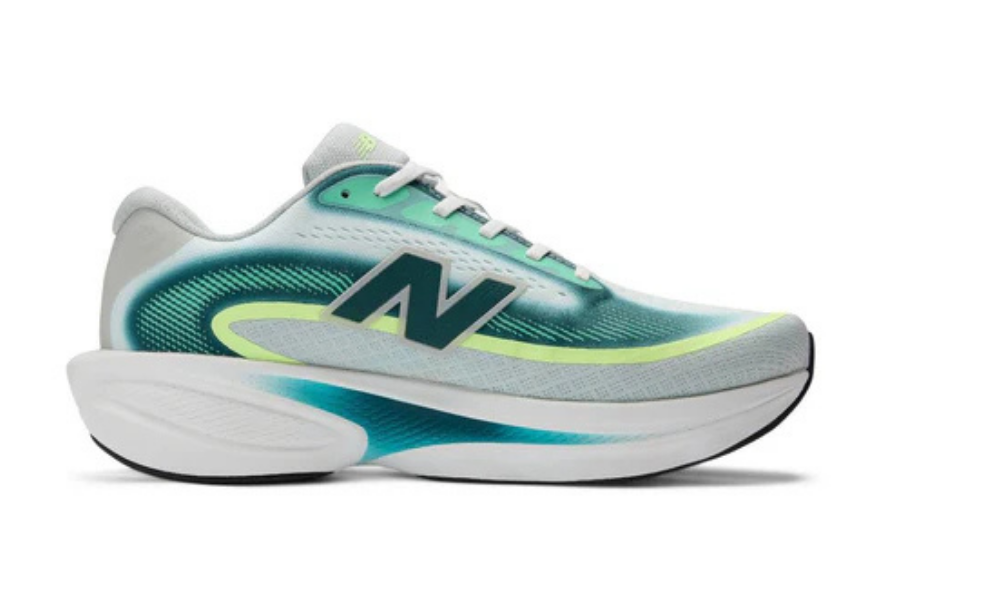
If you see a brand claim a shoe is “designed for the masses” or if they describe running as a “labor of love” in their marketing, it’s likely going to be laborious to run in the product; we’ve found these shoes to be sub-par in most cases, including the New Balance Ellipse v1.
New Balance Ellipse v1
4. "Softer and Bouncier than Ever Before"
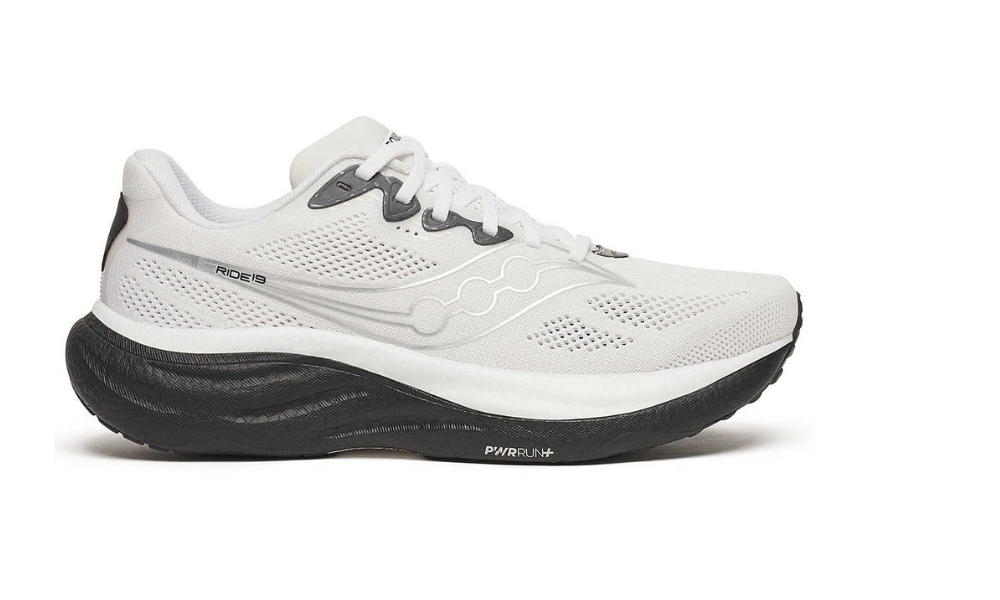
When brands describe their basic daily trainers as “softer and bouncier than ever before” without substantial tech updates to back it up, it might turn out to be a brick. The Saucony Ride 19 was a prime example this year.
Saucony Ride 19
5. "Jacquard Mesh" Upper Highlighted as Core Feature
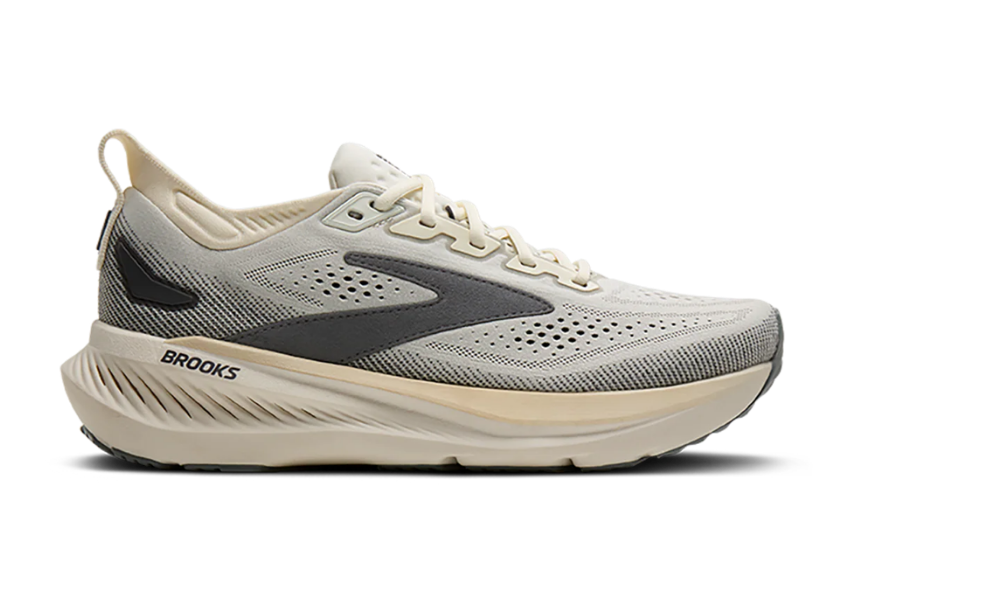
If a jacquard mesh upper is marketed as a primary selling feature of a shoe, it’s safe to say there won’t be much going on in the midsole department. This was the case with the disappointing Brooks Glycerin 23. Coming in at 10.9 ounces in a Men's US size 9, the Glycerin 23 was exceedingly heavy for a daily trainer in 2026.
Brooks Glycerin 23
Supwell App
For great deals on gently used or brand new running shoes, sign up for the Supwell app. You can also download it directly from the Apple App Store or Google Play Store. You'll get DAILY motivation, the most supportive hobby jogger community, best buy, sell and trade shoe marketplace and exclusive Hobby Jogger gear discounts, including access to the Running Warehouse code that will get you 20% off of clearance shoes.


Join the buy, sell, trade marketplace.
Find your next running shoe
Answer a few questions to find the best shoe based on your preferences and goals