Every Type of Running Shoe Stability Element
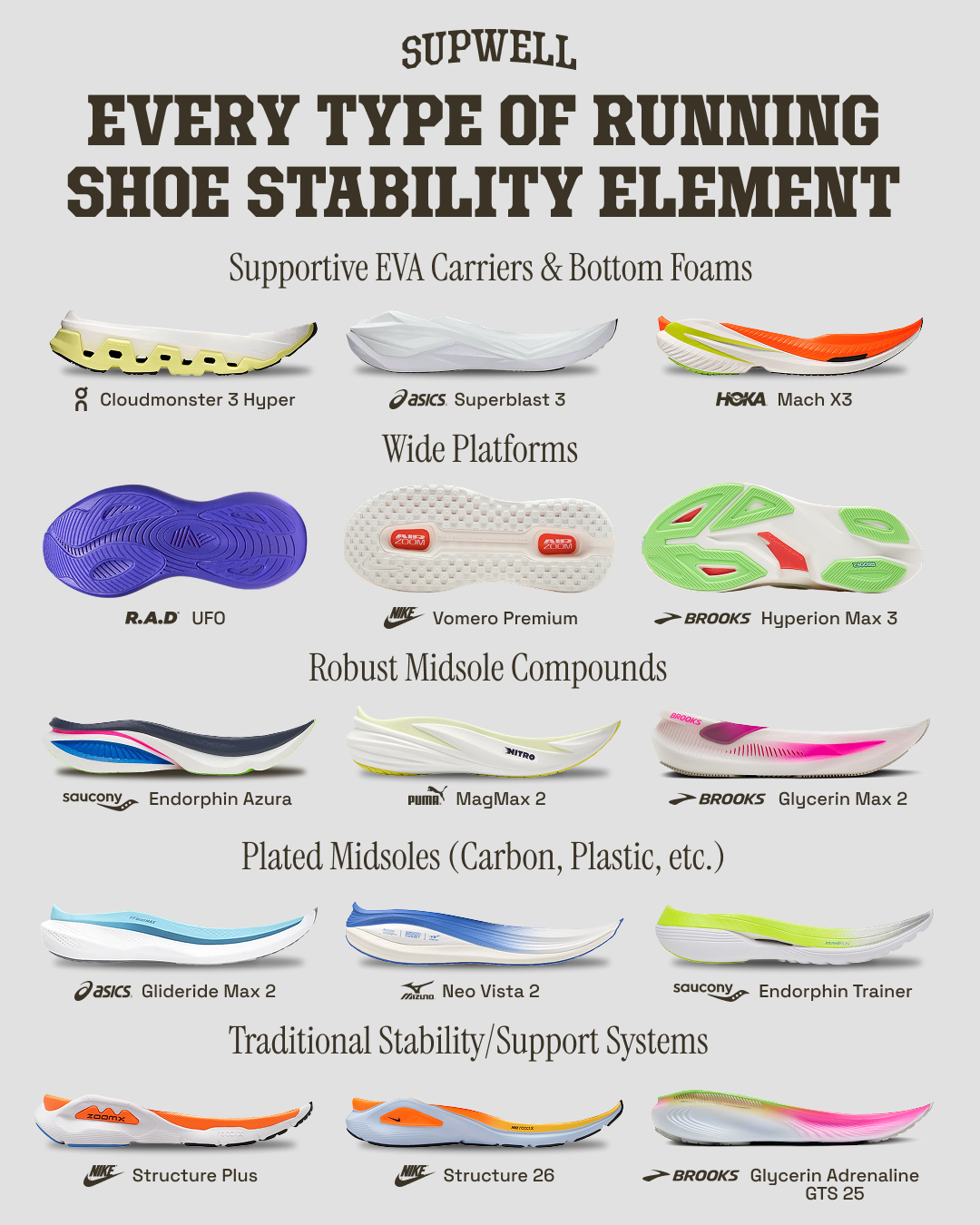
Stability running shoes are more fun and exciting than ever before. Running shoe brands are using EVA carriers, like used in the On Cloudmonster 3 Hyper, wide platforms, as seen in the R.A.D UFO, robust midsole compounds like that found in the Puma MagMax 2, plated midsoles as seen in the Mizuno Neo Vista 2, and traditional support systems like in the Nike Structure Plus.

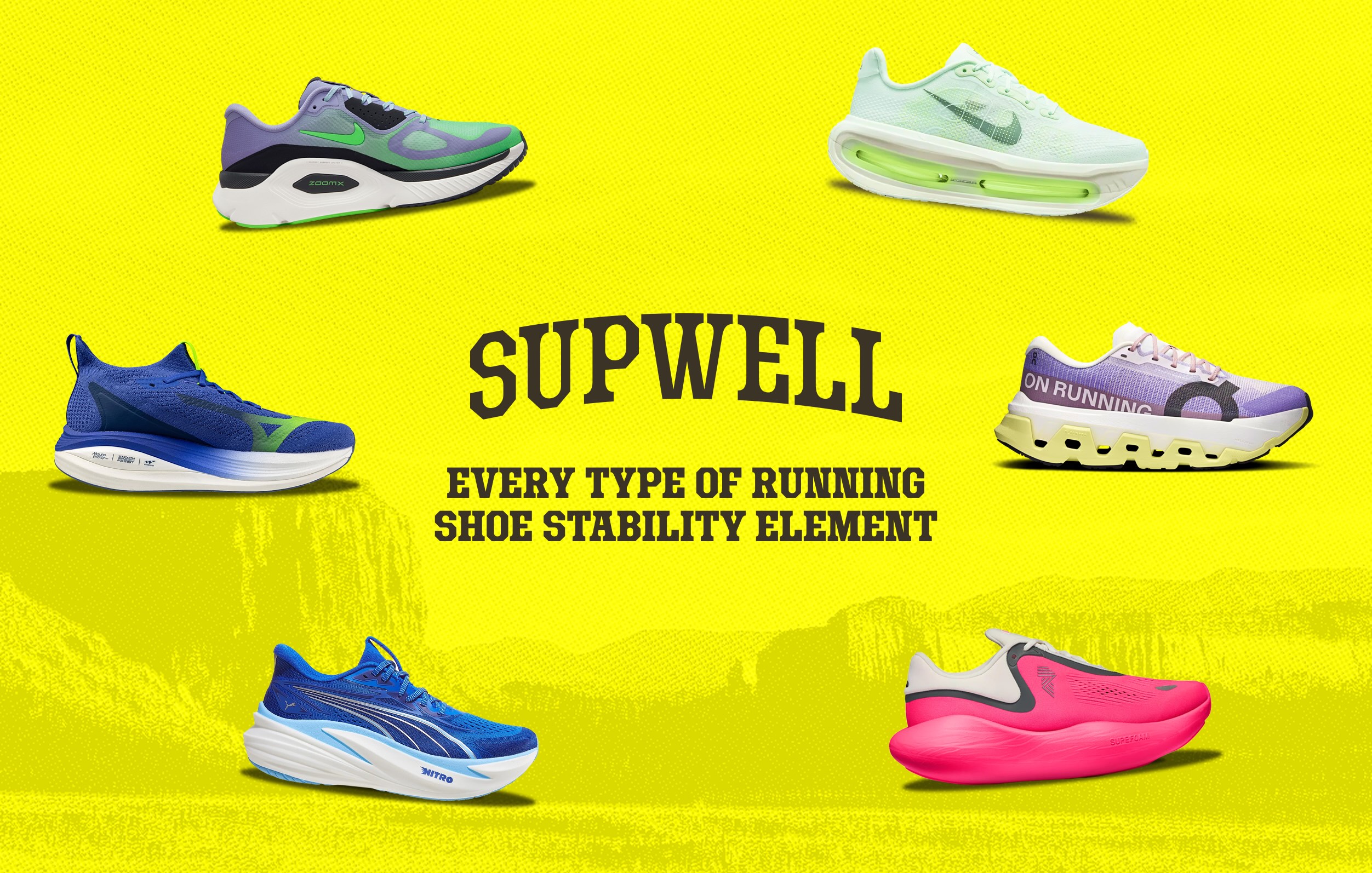
From supportive EVA carriers to wide platforms, plated midsoles, and traditional guidance systems, today’s trainers use a huge range of tools to keep runs smooth and controlled. Modern foams like PEBA, TPEE, and supercritical EVA now deliver stability without sacrificing bounce or comfort. Even max-stack racers and soft daily trainers rely on plates, geometry, and smart outsole shaping to stay steady underfoot, proving stability tech has never been more versatile.
Supportive EVA Carriers and Bottom Foams
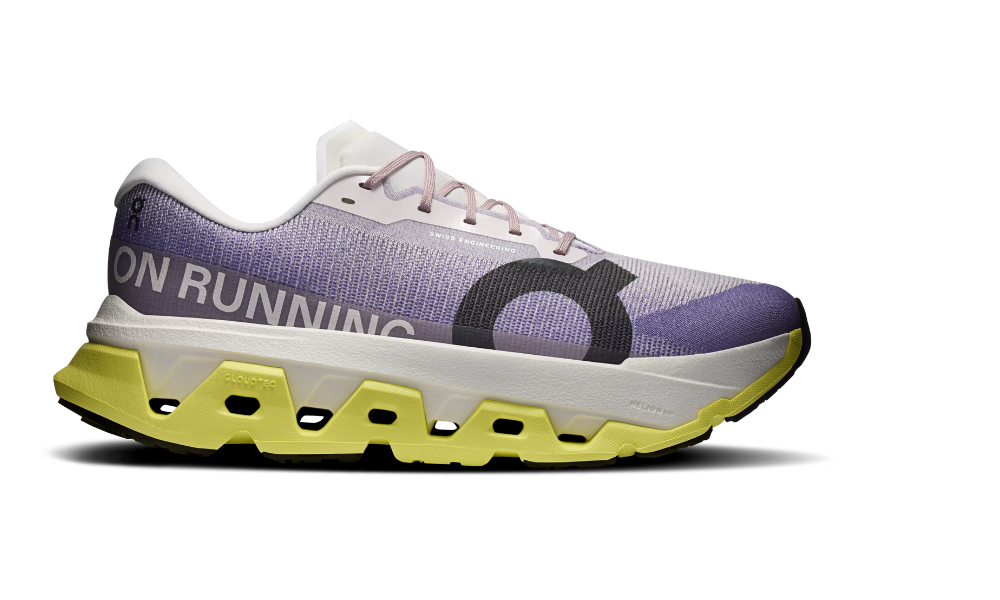
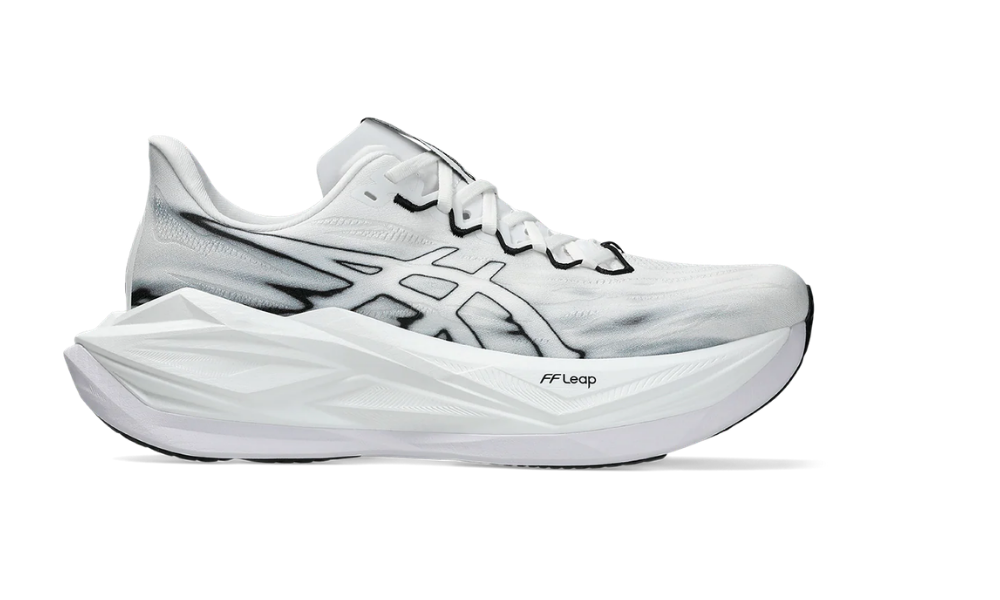
Standard EVA frequently gets a bad rap, but it still plays a critical role as a stability feature in some of the best training shoes on the market. In two of our current favorite shoes—the Cloudmonster 3 Hyper and Superblast 3, soft, springy slabs of PEBA and TPEE sit in stable EVA carriers, enabling race caliber foams to be viable in daily trainers. The Hoka Mach X3 and the Saucony Hurricane 25 also use these type of carrier foam set-ups.
On Cloudmonster 3 Hyper
ASICS Superblast 3
Wide Platforms
Over the past 2 years, running shoe footprints in virtually every category have widened, leading to better stability across the board, even in shoes you’d expect to be squirrely. Key examples include the boat-like outsole of the Vomero Premium and R.A.D UFO and the massive forefoot launchpad of the Adidas Prime X3 Strung (a model formerly known for its narrow, unstable base) and the Brooks Hyperion Max 3.
Nike Vomero Premium

R.A.D UFO
%202.png)
Robust Midsole Compounds
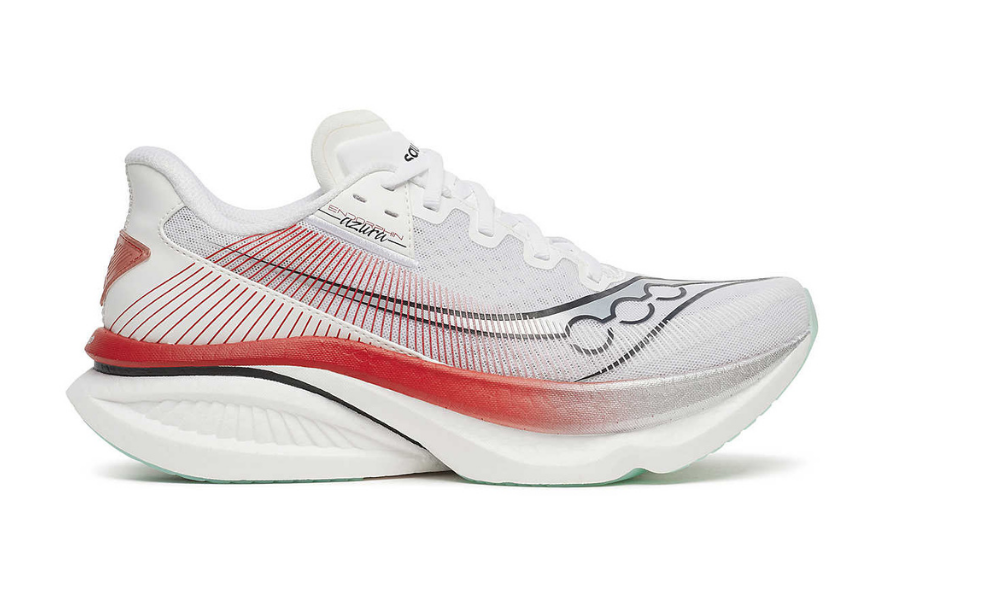
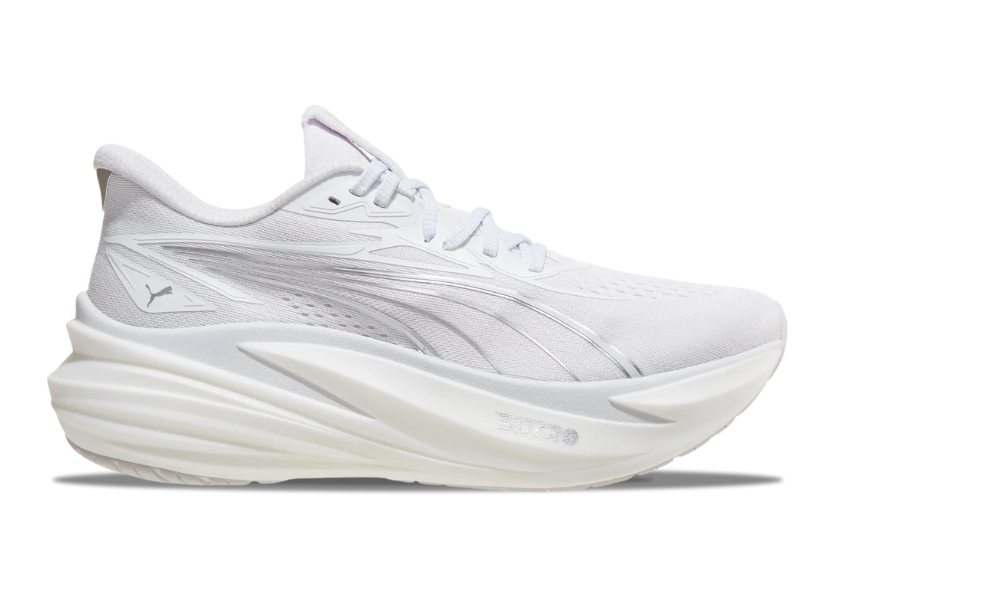
Runners no longer have to settle for sub-par midsole compounds in their search for a stable mileage companion. In 2026, robust formulations of PEBA, supercritical EVA, TPU, etc now combine excellent inherent stability with bounce and underfoot comfort. These set-ups often result in a pretty firm underfoot feel, such as in the Saucony Endorphin Azura, Puma MagMax 2, and the Brooks Glycerin Max 2.
Saucony Endorphin Azura
Puma MagMax Nitro 2
Plated Midsoles
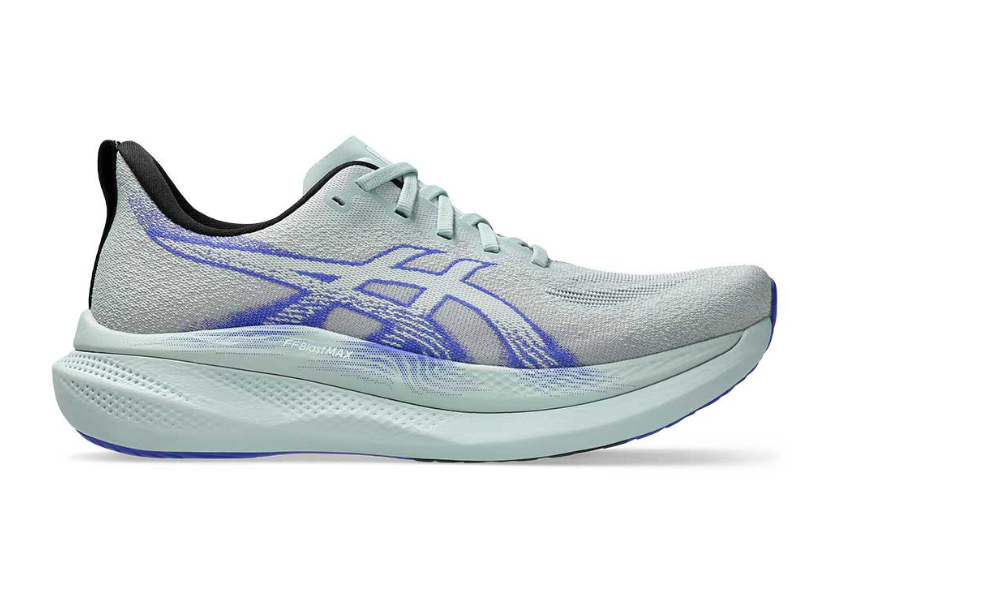
Plates aren’t just for speed assistance. In many max cushion shoes, brands use plates made of Pebax, nylon, carbon, and other composites to stabilize tall stacks of soft, compressive foam. This can also be observed in marathon racers: the ASICS Metaspeed Ray and Saucony Endorphin Elite 2 feature foams that are wildly unstable on their own, necessitating a plate as a structuring element. Some examples in daily trainers are the Mizuno Neo Vista 2, ASICS Glideride Max 2, and the Saucony Endorphin Trainer.
ASICS Metaspeed Ray

ASICS GlideRide Max 2
Traditional Stability Elements
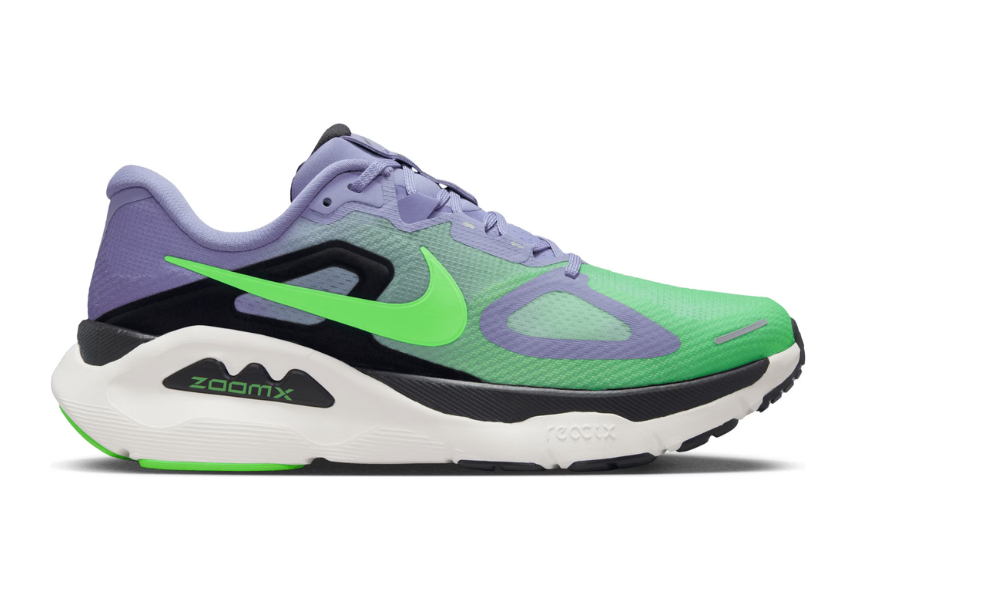
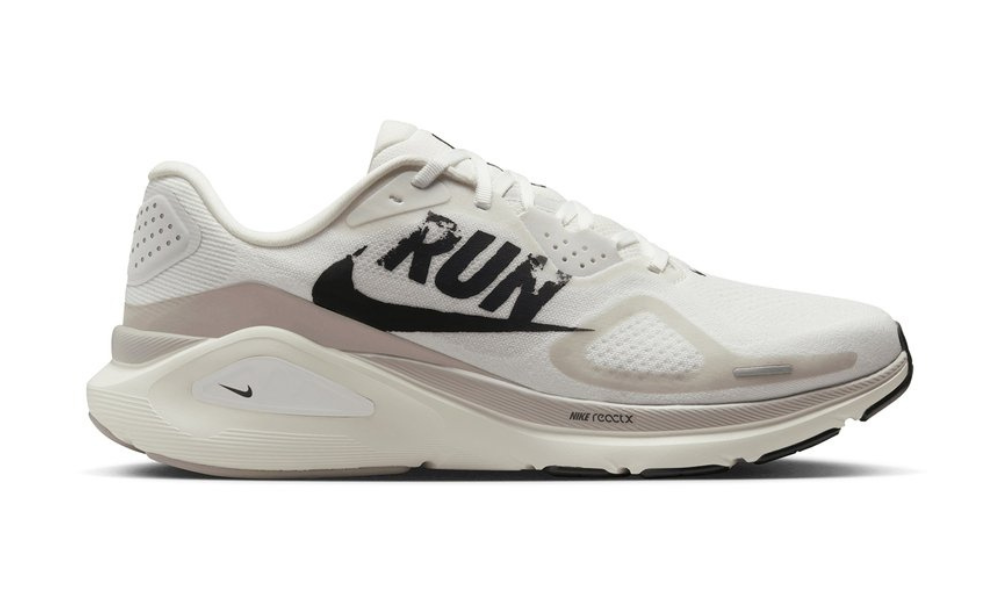
With neutral shoes becoming more inherently stable, medial posts, guiderails, and other support elements have waned in popularity. Nonetheless, there are still excellent options on the market for those seeking traditional stability tech. Nike’s Structure series, both in the Structure 26 and Structure Plus, features a Midfoot Support System that provides stability and guidance without the feeling of being clipped down in the heel. These traditional stability elements are also utilized in the Brooks Adrenaline GTS 25.
Nike Structure Plus
Nike Structure 26
Supwell App
For great deals on gently used or brand new running shoes, sign up for the Supwell app. You'll get DAILY motivation, the most supportive hobby jogger community, best buy, sell and trade shoe marketplace and exclusive Hobby Jogger gear discounts, including access to the Running Warehouse code that will get you 20% off of clearance shoes.


Join the buy, sell, trade marketplace.
Find your next running shoe
Answer a few questions to find the best shoe based on your preferences and goals